

MATERIALS
KOCHIKUDO(古竹堂)は、受け継がれてきた掛け軸の技を礎に、現代の美意識を静かに重ね合わせた“新しい掛け軸のかたち”を探求する工房です。日本の掛け軸が育んできた「余白の美」「素材の調和」「静けさを飾る文化」を大切にしながら、現代の空間に自然と溶け込む軽やかで洗練された表現を追求しています。裂地や和紙、絹が持つ微細な表情を生かし、一つひとつの工程を丁寧に積み重ねることで、日々の暮らしにそっと寄り添う静かな存在感を持つ作品を生み出しています。伝統の技法を守りつつ、現代の感性に寄り添う掛け軸を通して、空間に新たな余白と深い呼吸をもたらすことを目指しています。
掛け軸は、本紙を中心に、一文字・中廻し・外廻しといった裂地、そして軸先など、いくつもの素材と部位が静かに調和して成り立っています。KOCHIKUDO では、伝統的な技法を大切にしながらも、現代の空間に寄り添う“モダン掛け軸”としての美しさを追求するため、裂地の風合いや軸先の素材に至るまで、厳選したものだけを使用しています。本ページでは、当店で用いている素材の特徴をご紹介するとともに、掛け軸を形づくる各部位名称についても丁寧に解説しています。素材の質感や佇まいがどのように作品を支え、静かな存在感を生み出しているのか──その背景にある美しさを、どうぞゆっくりとご覧ください。
A kakejiku is composed of many elements that come together in quiet harmony: the honshi at its center, the ichimonji, naka-mawashi, and soto-mawashi fabrics, and the jikusaki at the lower ends. At KOCHIKUDO, while honoring traditional techniques, we pursue the beauty of the modern kakejiku—one that resonates naturally with contemporary spaces. For this reason, we use only carefully selected materials, from the texture of the mounting fabrics to the choice of jikusaki. In this section, we introduce the characteristics of the materials we use, along with explanations of the parts that form a kakejiku. We hope this guide helps you appreciate how each material’s texture and presence supports the artwork and creates the serene atmosphere unique to a finely crafted kakejiku.
挂轴由多种元素静静构成:以本纸为中心,一文字、中回、外回等裂地,以及位于底部两端的轴先共同协调。KOCHIKUDO 在珍视传统技法的同时,也追求能够融入现代空间的“现代挂轴”之美。因此,从裂地的质感到轴先的材质,我们都坚持只使用精心挑选的材料。本页面将介绍我们所采用的材料特点,并对构成挂轴的各部位名称进行说明。希望这些内容能帮助您了解,不同材质的质感与气息如何支撑作品,并为整幅挂轴带来宁静而深邃的氛围。
Un kakemono est composé de nombreux éléments qui s’harmonisent avec discrétion : le honshi au centre, les tissus ichimonji, naka-mawashi et soto-mawashi, ainsi que les jikusaki placés aux extrémités inférieures. Chez KOCHIKUDO, tout en respectant les techniques traditionnelles, nous recherchons la beauté du kakemono moderne, capable de s’intégrer naturellement dans les espaces contemporains. C’est pourquoi nous sélectionnons avec soin chaque matériau, qu’il s’agisse de la texture des tissus de montage ou du choix des jikusaki. Cette page présente les caractéristiques des matériaux que nous utilisons, ainsi qu’une explication des différentes parties qui composent un kakemono. Nous espérons que ces informations vous permettront de percevoir comment la texture et la présence de chaque matériau soutiennent l’œuvre et contribuent à l’atmosphère sereine propre à un kakemono finement réalisé.
シャルムーズシルク
シャルムーズシルクは、絹糸を高密度に織り上げ、片面に深い光沢を宿すことで知られる、極めて上質でエレガントな絹織物です。滑らかに流れるような質感と、角度によって表情を変える艶やかな輝きは、まるで光そのものを纏ったかのような気品を放ちます。触れた瞬間に感じるしっとりとした柔らかさは、絹が持つ本来の美しさを最大限に引き出し、作品に静かな華やぎと洗練された深みを与えます。掛け軸に用いると、光の移ろいが本紙の存在を優しく包み込み、空間に柔らかな陰影と上質な余白を生み出します。シャルムーズシルクがもつ控えめで上品な光沢は、作品の色彩を穏やかに引き立て、落ち着いた高級感を添えてくれます。繊細さと優雅さを求める方にふさわしい、格別の素材です。
生地:正絹
Charmeuse Silk
Charmeuse silk is an exceptionally refined and elegant silk fabric, woven at a high density and known for its deep luster on one side. Its smooth, flowing texture and the luminous sheen that shifts with the angle of light give it a noble presence, as if it were draped in light itself. The soft, moist touch felt the moment it is handled brings out the inherent beauty of silk, adding a quiet radiance and a sophisticated depth to the work. When used in a kakejiku, the subtle movement of light gently envelops the honshi, creating soft shadows and a sense of refined space. The understated, graceful sheen of charmeuse silk enhances the colors of the artwork with calm elegance, adding a composed sense of luxury. It is a truly exceptional material, suited for those who seek delicacy and refinement.
Fabric: Pure Silk
Charmeuse丝
Charmeuse 丝是一种以高密度织造、单面具有深邃光泽而闻名的高级优雅丝织物。其顺滑流动的质感,以及随光线角度而变化的柔亮光泽,如同披上了光本身般,散发出高贵的气韵。触碰瞬间所感受到的柔润细腻,将丝绸原本的美感发挥到极致,为作品增添静谧的华彩与精致的深度。用于挂轴时,光影的变化会轻柔地包覆 honshi,使空间呈现柔和的层次与上质的留白。Charmeuse 丝所具有的低调而高雅的光泽,能温和地衬托作品的色彩,带来沉稳的高级感。是追求细腻与优雅之人所钟爱的卓越材质。
布料:纯真丝
Soie Charmeuse
La soie charmeuse est un tissu de soie d’une grande finesse, tissé à haute densité et reconnu pour son éclat profond sur une seule face. Sa texture fluide et soyeuse, ainsi que la brillance subtile qui change selon l’angle de la lumière, lui confèrent une élégance presque lumineuse, comme si elle portait la lumière elle‑même. La douceur moelleuse que l’on ressent dès le premier contact révèle pleinement la beauté naturelle de la soie, apportant une lueur discrète et une profondeur raffinée à l’œuvre. Utilisée dans un kakemono, la variation de la lumière enveloppe délicatement le honshi, créant des ombres douces et un espace empreint de sobriété et de finesse. La brillance discrète et noble de la soie charmeuse met en valeur les couleurs de l’œuvre avec une élégance apaisée, ajoutant une sensation de luxe serein. C’est un matériau d’exception, idéal pour ceux qui recherchent délicatesse et raffinement.
Tissu : Soie pure
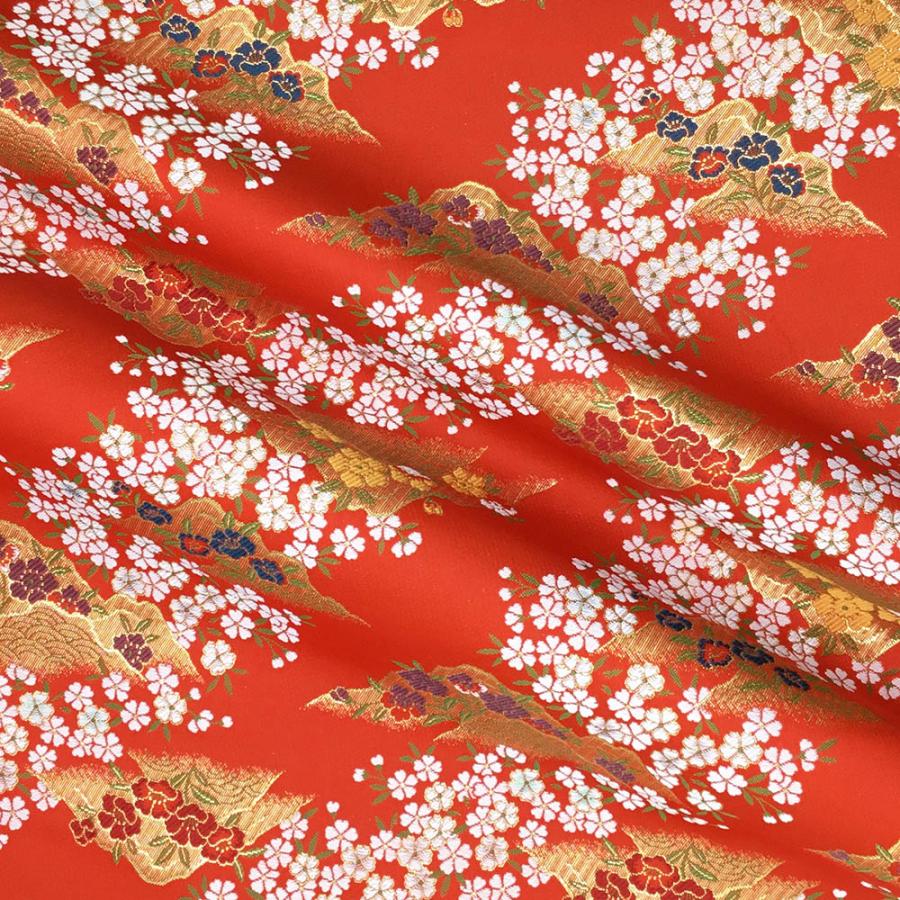
正絹金襴
正絹金襴は、絹糸に金糸や箔を織り込むことで生まれる、日本の織物技術の極致ともいえる最高級裂地です。精緻な文様が立体的に浮かび上がり、光の角度によって静かな金色から荘厳な輝きへと表情を変えるその美しさは、まさに工芸の宝と呼ぶにふさわしい存在です。掛け軸の一文字に用いると、作品全体の格を一段と引き上げ、古典的な威厳と現代的な洗練が調和した、凛とした佇まいを生み出します。金襴特有の重厚感と気品は、空間に静かな緊張感をもたらし、鑑賞者の視線を自然と作品へ導きます。日本の伝統美と高級感を象徴する、特別な場面にこそふさわしい素材です。
生地:正絹・金糸
※ 刺繍に使用している金糸は合成金糸です。本金ではありません。
Pure Silk Kinran
Pure silk kinran is one of the finest Japanese textiles, created by weaving gold threads and foil into silk. Its intricate patterns rise with a three‑dimensional presence, and its beauty shifts from a quiet golden glow to a majestic radiance depending on the angle of light—truly worthy of being called a treasure of craftsmanship. When used for the ichimonji of a kakejiku, it elevates the dignity of the entire piece, creating a poised presence where classical solemnity and modern refinement coexist in harmony. The distinctive weight and elegance of kinran bring a quiet tension to the space, naturally guiding the viewer’s gaze toward the artwork. It is a material that symbolizes the traditional beauty and luxury of Japan, perfectly suited for special and meaningful occasions.
Fabric: Pure Silk · Metallic Thread
※ The gold thread used in the embroidery is synthetic and not made of real gold.
纯丝金襴
正绢金襴是一种将金线与金箔织入丝线之中而成的顶级织物,可谓日本织造技艺的极致。精致的纹样以立体感浮现,随着光线角度的变化,从静雅的金色到庄严的光辉展现出多样的表情,其美感堪称工艺之宝。用于挂轴的一文字时,可提升整幅作品的格调,使古典的威严与现代的洗练相互融合,呈现出端正而凛然的气韵。金襴特有的厚重感与高雅气质,为空间带来静谧的紧张感,自然引导观者的视线聚焦于作品本身。它象征着日本的传统之美与高级感,是最适合用于特别场合的珍贵材质。
布料:纯真丝 · 金属线
※ 刺绣所使用的金线为合成金线,并非真金。
kinran en soie pure
Le kinran en soie pure est un tissu d’exception, considéré comme l’un des sommets de l’art textile japonais, où des fils d’or et des feuilles métalliques sont tissés dans la soie. Ses motifs minutieux apparaissent avec un relief subtil, et sa beauté varie selon l’angle de la lumière, passant d’un or discret à une brillance majestueuse — une véritable merveille artisanale. Utilisé comme ichimonji dans un kakemono, il rehausse la dignité de l’ensemble, créant une présence noble où se mêlent harmonieusement solennité classique et raffinement contemporain. La profondeur et l’élégance propres au kinran apportent une tension silencieuse à l’espace, guidant naturellement le regard vers l’œuvre. C’est un matériau qui incarne la beauté traditionnelle et le luxe du Japon, parfaitement adapté aux moments les plus précieux.
Tissu : Soie pure · Fil métallique
※ Le fil doré utilisé pour la broderie est un fil synthétique et non de l’or véritable.
デュピオニシルク
デュピオニシルクは、二匹の蚕が同じ繭を作ることで生まれる 独特の“節(スラブ)”の表情を持つ、極めて個性的で上質な絹織物です。 不規則に走る凹凸が光を複雑に反射し、静けさの中に豊かな陰影を宿すその質感は、 自然素材ならではの力強さと気品をあわせ持っています。 掛け軸に用いると、作品に奥行きと深みが生まれ、 伝統的な空間にも現代的な空間にも自然に調和する、洗練された存在感を放ちます。 色調を問わず、デュピオニシルクがもつ控えめな光沢は、 作品の色彩を静かに引き立て、落ち着いた美しさを添えてくれます。 軽やかでありながら適度な張りがあり、 長く飾ってもその美しさを保つ耐久性も魅力のひとつです。 唯一無二の表情を求める方にふさわしい、特別な素材です。
生地:正絹
Dupioni Silk
Dupioni silk is a highly distinctive and refined silk fabric, created when two silkworms form a single cocoon, giving rise to its characteristic slub texture. The irregular ridges and subtle unevenness reflect light in complex ways, holding deep shadows and quiet richness within their surface — a balance of natural strength and graceful elegance unique to this material. When used in a kakejiku, it brings depth and dimension to the artwork, offering a sophisticated presence that harmonizes naturally with both traditional and contemporary spaces. Regardless of color, the understated sheen of dupioni silk gently enhances the tones of the piece, adding a calm and composed beauty. Lightweight yet pleasantly firm, it also offers durability that allows its beauty to be preserved over many years. It is a truly special material, suited for those who seek a one‑of‑a‑kind texture and expression.
Fabric: Pure Silk
Dupioni丝
Dupioni 丝是一种极具个性与品质的高级丝织物,由两只蚕共同结茧而形成,因而拥有独特的“节(slub)”状纹理。不规则的凹凸会以复杂的方式反射光线,在静谧之中呈现丰富的阴影层次,兼具自然素材特有的力量感与高雅气质。
用于挂轴时,它为作品带来深度与立体感,在传统空间与现代空间中都能自然融入,展现出洗练而沉稳的存在感。无论色调如何,Dupioni 丝低调的光泽都会静静衬托作品的色彩,增添安定而优雅的美感。
它轻盈却具有适度的挺度,并拥有长期陈列也能保持美感的耐久性,是追求独特质感与唯一表情之人所钟爱的特别材质。
布料:纯真丝
Soie Dupioni
La soie dupioni est un tissu de grande qualité, au caractère très singulier, né lorsque deux vers à soie forment un même cocon, créant ainsi sa texture irrégulière et ses “slubs” caractéristiques. Les reliefs subtils et les irrégularités reflètent la lumière de manière complexe, révélant des ombres profondes et une richesse silencieuse — un équilibre unique entre force naturelle et élégance raffinée. Employée dans un kakemono, elle apporte profondeur et dimension à l’œuvre, offrant une présence sophistiquée qui s’harmonise naturellement aussi bien avec les espaces traditionnels que contemporains. Quelle que soit la teinte, la brillance discrète de la soie dupioni met en valeur les couleurs de l’œuvre avec une beauté calme et posée. Légère tout en conservant une tenue agréable, elle possède également une durabilité qui permet de préserver sa beauté au fil des années. C’est un matériau d’exception, idéal pour ceux qui recherchent une texture unique et une expression véritablement singulière.
Tissu : Soie pure
宇多野裂
宇多野裂は、京都・宇多野の地で受け継がれてきた高度な織技が生み出す、格調高い伝統裂地です。織りの密度が非常に高く、手に取るとしっとりとした重みと上質な質感が伝わり、細やかな文様が光を柔らかく受け止めて、深い静けさと品格を湛えます。茶・灰・鼠といった日本的な色調は、どんな作品とも調和しながら、背景としての存在感をしっかりと保ち、掛け軸全体に落ち着いた格と奥行きを与えます。派手さを排しながらも、近づくほどに織りの精緻さが際立つその佇まいは、まさに“静謐な高級感”の象徴です。伝統美と上質さを求める方にふさわしい、格別の裂地です。
生地:正絹
Utano Fabric
Utano Fabric is a distinguished traditional textile woven with the highly refined techniques passed down in the Utano district of Kyoto. Its exceptionally dense weave gives it a soft weight and a rich, refined texture when held in the hand. The delicate patterns gently receive the light, creating a deep sense of stillness and quiet dignity. The Japanese tones—such as brown, gray, and mouse-gray—harmonize naturally with any artwork, maintaining a strong presence as a background while adding calm depth and composure to the entire kakejiku. Free from ostentation, yet revealing remarkable intricacy the closer one looks, its character embodies the essence of “silent luxury.” It is an exceptional textile, ideal for those who seek traditional beauty and refined quality.
Fabric: Pure Silk
宇多野裂
宇多野裂是京都宇多野地区传承至今的高超织造技艺所孕育出的高雅传统裂地。其织密度极高,拿在手中能感受到柔润的重量与上质的触感。细腻的纹样柔和地承接光线,呈现出深沉的静谧与品格。茶、灰、鼠等日本特有的色调能够与任何作品自然协调,同时作为背景保持稳重的存在感,为整幅挂轴增添沉静的格调与深度。它摒弃华丽,却在靠近时愈发显露织造的精致,是“静谧高级感”的象征。对于追求传统之美与上乘品质的人来说,是极为出色的裂地。
布料:纯真丝
Tissu d’Utano
Le Tissu d’Utano est un textile traditionnel d’une grande distinction, né du savoir‑faire raffiné transmis depuis des générations dans le quartier d’Utano à Kyoto. Son tissage extrêmement dense offre, au toucher, un poids doux et une texture d’une grande qualité. Les motifs délicats accueillent la lumière avec douceur, révélant une profondeur silencieuse et une véritable noblesse. Les teintes japonaises — bruns, gris et nuances souris — s’harmonisent naturellement avec toute œuvre, tout en conservant une présence affirmée en tant que fond, apportant calme, profondeur et dignité à l’ensemble du kakemono. Sans ostentation, mais dévoilant une finesse remarquable à mesure que l’on s’en approche, il incarne parfaitement l’idée d’un “luxe silencieux”. C’est un textile d’exception, idéal pour ceux qui recherchent beauté traditionnelle et qualité supérieure.
Tissu : Soie pure
Osborne & Little "Painted Lady"
Osborne & Little 社は、1968 年にロンドンで創業して以来、独創的なデザインと洗練された色彩表現で知られ、英国を代表するテキスタイルブランドとして国際的な評価を築いてきました。その作品は美術館にも収蔵され、インテリアファブリックの世界に新しい感性と静かな華やぎをもたらしてきました。同社の《Painted Lady》は、現在は製造されていない希少なヴィンテージファブリックです。蝶の羽を思わせる柔らかな曲線と深みのある色調が、布そのものに静かな動きを宿し、年月を経た素材ならではの落ち着いた気配が漂います。洋の美意識と日本の余白が自然に溶け合い、掛け軸の本紙としても、空間にそっと寄り添う上品な光を添える一幅へと仕立てられる生地です。
生地:リネン49%・コットン38%・ポリアミド13%
Osborne & Little "Painted Lady"
Osborne & Little, founded in London in 1968, has long been celebrated for its distinctive designs and refined use of color, establishing itself as one of the leading textile brands in the United Kingdom. Its works have been collected by museums and have brought fresh sensibilities and a quiet elegance to the world of interior fabrics. The company’s Painted Lady is a rare vintage fabric that is no longer in production. Soft, wing‑like curves and deep, layered tones lend the textile a gentle sense of movement, while the calm presence unique to aged materials subtly emerges from its surface. Blending Western aesthetics with the Japanese appreciation for space, it becomes a fabric well suited for the honshi of a kakejiku, adding a refined, understated light to the surrounding space.
Fabric: 49% Linen · 38% Cotton · 13% Polyamide
Osborne & Little "Painted Lady"
Osborne & Little 自 1968 年在伦敦创立以来,以独创性的设计与精致的色彩表现而闻名,被视为英国代表性的纺织品牌,并在国际上享有盛誉。其作品亦被美术馆收藏,为室内布艺领域带来了新的感性与静雅的气息。 该公司推出的 Painted Lady 为现已停产的珍贵复古面料。柔和的曲线如蝶翼般展开,深沉的色调层次丰富,呈现出随岁月沉淀而来的宁静气息。西方的美学与日本的留白在其中自然交融,作为 kakejiku 的 honshi,也能为空间添上一抹内敛而优雅的光。
布料:49% 亚麻 · 38% 棉 · 13% 聚酰胺
Osborne & Little "Painted Lady"
Depuis sa fondation à Londres en 1968, Osborne & Little est reconnu pour ses créations originales et son sens raffiné de la couleur, s’imposant comme l’une des grandes maisons textiles britanniques. Certaines de ses œuvres figurent dans des collections muséales, apportant une sensibilité nouvelle et une élégance discrète au monde du tissu d’intérieur. Le Painted Lady de la maison est un tissu vintage rare, aujourd’hui hors production. Ses courbes douces, évoquant des ailes de papillon, et ses tonalités profondes confèrent à la matière un mouvement silencieux, tandis que la patine du temps lui donne une présence apaisée. L’esthétique occidentale s’y mêle naturellement au sens japonais du vide, faisant de ce tissu un choix harmonieux pour le honshi d’un kakemono, où il diffuse une lumière subtile et raffinée dans l’espace.
Tissu : 49% Lin · 38% Coton · 13% Polyamide
moda fabrics "William Morris/LIECESTER"
moda fabrics の William Morris / LEICESTER は、1912 年に J.H. Dearle が描いた図案をもとに再構成されたプリントファブリックです。大きく伸びるアカンサスの葉と、小花や枝が重なり合う構図が穏やかなリズムを生み、布面に静かな動きを宿しています。コットンならではの柔らかさと扱いやすい厚みは、掛け軸の中廻しとしても本紙をやさしく受け止め、作品全体の調和を静かに整えます。色調は落ち着きがありながらも、どこか軽やかな明るさを含み、空間にそっと寄り添う柔らかな気配を添えてくれます。ヴィンテージデザインの趣を保ちながら、現代の布としての親しみやすさも備えた一枚。洋の装飾性が控えめに息づき、日本の余白と自然に溶け合う、穏やかな存在感を持つ素材です。
生地:コットン100%
moda fabrics "William Morris/LIECESTER"
William Morris / LEICESTER by moda fabrics is a printed textile reinterpreted from a 1912 design by J.H. Dearle. The sweeping acanthus leaves, intertwined with small flowers and branches, create a gentle rhythm that brings a quiet sense of movement across the surface of the cloth. The natural softness of cotton and its comfortable weight allow it to cradle the honshi of a kakejiku with ease, quietly balancing the overall composition. Its calm tones, touched with a hint of brightness, lend a soft presence that settles gently into the surrounding space. While preserving the charm of a vintage design, the fabric also carries the familiarity of a contemporary material. Subtle Western ornamentation breathes within it, blending naturally with the Japanese appreciation for ma, making it a material with a serene and harmonious presence.
Fabric: 100% Cotton
moda fabrics "William Morris/LIECESTER"
moda fabrics 的 William Morris / LEICESTER 以 J.H. Dearle 于 1912 年的图案为基础重新构成。大幅延展的叶饰与细小花枝交织,形成温和的节奏,为布面带来静静的流动感。 棉布特有的柔软与适中的厚度,使其在 kakejiku 的中廻し中能够轻柔地承托 honshi,悄然调和整幅作品。沉稳的色调中带着一丝轻盈,为空间添上一抹柔和而安静的气息。 它既保留了复古设计的韵味,又具备现代布料的亲和力。低调的西式装饰性在其中轻轻呼吸,与日本的留白美学自然融合,呈现出一种安宁而和谐的存在感。
布料:100% 棉
moda fabrics "William Morris/LIECESTER"
Le William Morris / LEICESTER de moda fabrics est un tissu imprimé réinterprété à partir d’un motif dessiné en 1912 par J.H. Dearle. Les grandes feuilles d’acanthe, mêlées de petites fleurs et de rameaux, composent un rythme apaisé qui confère au textile un mouvement silencieux. La douceur naturelle du coton et son épaisseur agréable permettent d’accueillir avec délicatesse le honshi d’un kakemono, en harmonisant subtilement l’ensemble de la composition. Sa palette calme, éclairée d’une légère luminosité, apporte une présence douce qui se fond discrètement dans l’espace. Tout en conservant le charme d’un dessin vintage, ce tissu possède la familiarité d’une matière contemporaine. Une ornementation occidentale discrète y respire doucement, se mêlant naturellement au sens japonais du vide, pour offrir une présence sereine et harmonieuse.
Tissu : 100% Coton
軸先
軸先は、掛け軸の最下部に据えられる軸棒の両端に取り付けられた部位で、作品全体の佇まいを静かに支える重要な役割を担います。掛け軸を巻き下ろす際の手がかりとなる実用性を備えながら、その素材や形状が作品の印象に微細な表情を添え、重心の落ち着きを生み出します。素材には木製・陶器製・金属製・水晶・象牙など多様な種類があり、それぞれが異なる質感と気配をもたらします。軸先は単なる装飾ではなく、作品の世界観をそっと支える「最後の仕上げ」ともいえる部分です。KOCHIKUDO では、掛け軸の静謐な美しさに寄り添うため、主に陶器製の軸先を用いています。陶器特有の柔らかな光と質感が、作品の余白や裂地の風合いと調和し、掛け軸全体に穏やかな深みをもたらします。
Jikusaki
The jikusaki are fittings attached to both ends of the bottom rod of a kakejiku, quietly supporting the overall presence of the scroll. While serving as a practical handhold when unrolling the piece, their material and form add subtle nuances to the impression of the work and help establish a sense of visual balance. Jikusaki come in a variety of materials, including wood, ceramic, metal, crystal, and ivory, each offering its own texture and atmosphere. They are not merely decorative elements, but the final detail that gently completes the world of the artwork. At KOCHIKUDO, we primarily use ceramic jikusaki to harmonize with the serene beauty of our kakejiku. The soft light and texture unique to ceramic blend naturally with the margins of the artwork and the character of the mounting fabrics, bringing a quiet depth to the entire piece.
轴先
轴先安装在挂轴最下方的底杆两端,是静静支撑整幅作品气韵的重要部位。在展开挂轴时,它既具有实用的握持功能,其材质与形状也会为作品的印象增添细微的表情,并赋予整体以稳定的重心。轴先的材质多样,包括木质、陶器、金属、水晶、象牙等,每一种都带来不同的质感与气息。轴先不仅是装饰,更可视为支撑作品世界观的“最后点睛之笔”。在 KOCHIKUDO,我们主要使用陶器制的轴先,以契合挂轴静谧的美感。陶器特有的柔和光泽与质地,与作品的留白和裂地的风合自然相融,为整幅挂轴带来沉静而深邃的气息。
Jikusaki
Les jikusaki sont des éléments fixés aux deux extrémités de la baguette inférieure du kakemono, soutenant discrètement la présence de l’ensemble. Tout en servant de prise lors du déroulement, leur matière et leur forme apportent de subtiles nuances à l’impression de l’œuvre et contribuent à l’équilibre visuel du kakemono. Ils existent en divers matériaux — bois, céramique, métal, cristal ou ivoire — chacun offrant une texture et une atmosphère particulières. Les jikusaki ne sont pas de simples ornements, mais la touche finale qui soutient silencieusement l’univers de l’œuvre. Chez KOCHIKUDO, nous utilisons principalement des jikusaki en céramique afin d’accompagner la beauté sereine de nos kakemono. La lumière douce et la texture propre à la céramique s’harmonisent naturellement avec les marges de l’œuvre et les tissus de montage, apportant une profondeur paisible à l’ensemble.
掛け軸の部位名称
本紙:掛け軸の中心となる部分で、作品そのものが据えられる最も大切な領域です。素材の風合いが作品の表情を支え、全体の印象を決定づけます。
一文字:本紙の上下に配される細い裂地で、作品と中廻しをつなぐ役割を持ちます。金襴や上質な裂地が用いられ、作品の印象を静かに引き締めます。
中廻し:本紙の周囲を囲む裂地で、作品と外廻しをつなぐ中心的な部分です。落ち着いた色柄が選ばれ、作品全体の調和を静かに整えます。
外廻し:中廻しの外側を囲む裂地で、掛け軸全体の印象を決める重要な部分です。素材の風合いが際立ち、作品に静かな存在感を添えます。
筋廻し:本紙や中廻しの周囲に細く配される装飾線で、構成を引き締める役割を持ちます。控えめながら、作品に端正な表情をもたらします。
太筋:外廻しの上下に施された、装飾としての太い筋(ストライプ)です。古来の掛け軸には見られない意匠で、KOCHIKUDO が現代的な要素として取り入れている独自の装飾です。作品全体に静かなリズムを与え、佇まいをより端正に整えます。
軸先:掛け軸の最下部、軸棒の両端に取り付けられる装飾的な部位です。素材の質感や形状が掛け軸全体の佇まいを静かに支え、巻き下ろす際の手がかりとしても機能します。
※ 掲載している画像は Type-A のものですが、部位名称や構成は他のタイプにも共通するものです。
Parts of a Kakejiku
Honshi: The central area of the kakejiku where the artwork itself is placed. The texture of the material supports the expression of the piece and shapes the overall impression.
Ichimonji: A narrow strip of fabric placed above and below the honshi, connecting the artwork to the naka‑mawashi. Kinran or other fine textiles are used, giving the kakejiku a quietly refined and balanced impression.
Nakamawashi: The fabric surrounding the honshi, serving as the central element that links the artwork to the sotomawashi. Calm and balanced patterns are chosen to harmonize the entire composition.
Sotomawashi: The fabric placed outside the nakamawashi, playing an important role in defining the overall impression of the kakejiku. Its texture adds a quiet presence to the work.
Sujimawashi: Thin decorative lines placed around the honshi or nakamawashi, giving structure and a refined appearance to the composition.
Futosuji: Bold decorative stripes placed above and below the sotomawashi. This contemporary design element, unique to KOCHIKUDO, is not found in traditional kakejiku. It adds a gentle rhythm and a more dignified presence to the piece.
Jikusaki: Located at the lower ends of the kakejiku, the jikusaki are decorative fittings attached to both sides of the bottom rod. Their material and form quietly support the overall presence of the scroll, while also serving as a gentle handhold when unrolling it.
※ The image shown uses the Type-A design, but the parts and their names are common to all types.
挂轴的各部位名称
Honshi(本纸):挂轴的核心部分,用于承载作品本身。材料的质感支撑着作品的表情,并决定整体印象。
一文字:位于本纸上下的细窄裂地,用于连接作品与中回し。多采用金襴或其他上质裂地,使作品的整体印象更加沉稳而内敛。
Nakamawashi(中围):围绕 honshi 的织物,是连接作品与 sotomawashi 的中心部分。多选用沉静的色彩与纹样,以保持整体的和谐。
Sotomawashi(外围):位于 nakamawashi 外侧的织物,是决定挂轴整体印象的重要部分。材料的质感凸显作品的静谧存在感。
Sujimawashi(筋围):围绕 honshi 或 nakamawashi 的细线状装饰,用于收紧构图,使作品呈现端正的表情。
Futosuji(太筋):位于 sotomawashi 上下的粗条纹装饰。此为 KOCHIKUDO 融入的现代设计元素,传统挂轴中并不存在,为作品增添静谧的节奏与端庄的气韵。
轴先:位于挂轴最下方,是安装在底杆两端的装饰部位。其材质与形状为整幅挂轴的气韵提供静稳的支撑,同时在展开时也起到顺手的辅助作用。
※ 所示图片为 Type-A,但各部位的名称与结构在其他类型中也相同。
Noms des différentes parties d’un Kakemono
Honshi: La zone principale du kakemono où l’œuvre est placée. La texture du matériau soutient l’expression de la pièce et détermine l’impression générale.
Ichimonji: Une bande étroite de tissu placée au-dessus et au-dessous du honshi, reliant l’œuvre au naka‑mawashi. Du kinran ou d’autres tissus de grande qualité sont utilisés, apportant au kakemono une élégance discrète et une présence équilibrée.
Nakamawashi: Le tissu entourant le honshi, reliant celui‑ci au sotomawashi. Des motifs calmes et équilibrés sont choisis pour harmoniser la composition.
Sotomawashi: Le tissu placé autour du nakamawashi, jouant un rôle essentiel dans l’impression générale du kakemono. Sa texture ajoute une présence silencieuse à l’œuvre.
Sujimawashi: De fines lignes décoratives disposées autour du honshi ou du nakamawashi, apportant structure et élégance.
Futosuji: De larges bandes décoratives situées au‑dessus et au‑dessous du sotomawashi. Élément contemporain propre à KOCHIKUDO, elles apportent un rythme discret et une allure plus raffinée.
Jikusaki : Placés aux extrémités inférieures du kakemono, les jikusaki sont des éléments décoratifs fixés aux deux côtés de la baguette inférieure. La texture et la forme de ces pièces soutiennent discrètement la présence du kakemono et offrent également une prise naturelle lors de son déroulement.
※ L’image présentée utilise le modèle Type-A, mais les éléments et leurs appellations sont communs à tous les types.
本紙や一文字は勿論のこと、筋回しに至る細部の一つひとつにまで絹を用い、全体を通して素材の気品が息づくように仕立てた、贅沢で端正な一幅です。
外廻しの上下に、古来の掛け軸には見られない KOCHIKUDO 独自の太筋をあしらい、モダン掛け軸としての現代的なリズムとニュアンスを添えています。この太筋は、伝統的な形式を損なうことなく、むしろ作品の余白を引き締め、視線の流れを静かに導く役割を果たしています。
絹がもつ静かな光沢が、作品の佇まいに深い陰影と奥行きを与え、光の当たり方や見る角度によって、わずかに表情を変えながら、空間にそっと溶け込むように佇みます。その変化は決して大げさではなく、あくまで控えめで、しかし確かに存在する“揺らぎ”として、作品に静かな生命感をもたらします。
静かに、しかし確かに移ろうその佇まいは、日々の光や空気の変化を受け止めながら、掛ける空間とともに成熟していくような、深い味わいを感じさせます。
本紙:シャルムーズシルク(デジタルプリント)
一文字:正絹金襴
中廻し:宇多野裂
外廻し:デュピオニシルク
太筋:シャルムーズシルク
筋回し:シャルムーズシルク
軸先:陶器
収納箱:桐
サイズ:H:195㎝ × W:55㎝(軸先 60㎝)
※本紙の描画は、肉筆ではなくデジタルプリントによるものです。
※サイズには、多少の誤差が生じることがございます。
※素材の詳細や掛け軸の各部位については、MATERIALS ページをご覧ください。
This piece is crafted with silk not only for the honshi and ichimonji, but also for every fine detail down to the sujimawashi, allowing the refined character of the material to resonate throughout the entire kakejiku. It is a luxurious and impeccably composed work.
At the upper and lower edges of the sotomawashi, KOCHIKUDO’s original futosuji—an element not found in traditional kakejiku—adds a contemporary rhythm and nuance befitting a modern kakejiku. These futosuji do not disrupt the classical form; rather, they tighten the surrounding whitespace and gently guide the viewer’s gaze.
The subtle sheen of silk imparts depth and quiet shadows to the work, shifting slightly in expression depending on the light and viewing angle, as if softly blending into the surrounding space. These changes are never dramatic; they remain understated, yet present as a gentle “yuragi,” a quiet fluctuation that brings a sense of life to the piece.
This quietly shifting presence responds to the daily changes of light and air, offering a deep sense of maturity as it lives and evolves together with the space in which it is displayed.
Honshi:Charmeuse silk(digital print)
Ichimonji:Pure Silk Kinran
Nakamawashi:Utano Fabric
Sotomawashi:Dupioni silk
Futosuji:Charmeuse silk
Sujimawashi:Charmeuse silk
Jikusaki:Ceramic
Storage box:Paulownia wood
Size:H:195cm/76.8in × W:55cm/21.6in(Jikusaki 60cm/23.6in)
※The honshi is digitally printed, not hand-painted.
※Slight variations in size may occur.
※For details on materials and the parts of a kakejiku, please refer to the MATERIALS page.
不仅是本纸和一文字,甚至到筋回し等细微之处都使用了丝绸,使整幅挂轴都蕴含着材料的高雅气息,是一幅奢华而端正的作品。
在外回し的上下位置加入了 KOCHIKUDO 独有的太筋,这在传统挂轴中并不存在,为现代挂轴增添了当代的节奏与韵味。这些太筋并未破坏传统形式,反而收紧了作品的留白,轻柔地引导视线的流动。
丝绸所具有的柔和光泽,为作品带来深邃的阴影与层次感,随着光线与观看角度的变化,呈现出细微的表情变化,仿佛悄然融入空间之中。这种变化并不夸张,而是低调却确实存在的“摇曳”,为作品带来静谧的生命感。
这种静静却确实流动的姿态,随着日常光线与空气的变化而回应,仿佛与所悬挂的空间一同成熟,呈现出深沉的韵味。
本纸:Charmeuse丝(数码印刷)
一文字:纯丝金襴
中回:宇多野裂
外回:Dupioni丝
太筋:Charmeuse丝
筋回:Charmeuse丝
轴头:陶器
收纳盒:桐木
尺寸:高:195cm × 宽:55cm(含轴头 60cm)
※本纸的图像为数码印刷,并非手绘。
※尺寸可能会有些许误差。
※关于材质与挂轴各部位的详细说明,请参阅 MATERIALS 页面。
Non seulement le honshi et l’ichimonji, mais aussi chaque détail jusqu’au sujimawashi sont réalisés en soie, permettant à la noblesse du matériau de respirer à travers l’ensemble du kakemono. Il s’agit d’une pièce luxueuse et d’une grande élégance.
Sur les parties supérieure et inférieure du sotomawashi, les futosuji originaux de KOCHIKUDO — absents des kakemono traditionnels — apportent un rythme et une nuance contemporains, caractéristiques d’un kakemono moderne. Ces futosuji ne rompent pas la forme classique ; ils resserrent plutôt les espaces blancs et guident subtilement le regard.
La douce brillance de la soie confère profondeur et ombre au caractère de l’œuvre, changeant légèrement d’expression selon la lumière et l’angle de vue, comme si elle se fondait discrètement dans l’espace. Ces variations ne sont jamais emphatiques ; elles demeurent discrètes, mais bien présentes, comme une légère “oscillation” qui insuffle une vie silencieuse à la pièce.
Cette présence, calme mais en perpétuelle évolution, répond aux variations quotidiennes de lumière et d’air, donnant l’impression que l’œuvre mûrit avec l’espace dans lequel elle est suspendue.
Honshi:Soie charmeuse(impression numérique)
Ichimonji:kinran en soie pure
Nakamawashi:Tissu d’Utano
Sotomawashi:Soie dupioni
Futosuji:Soie charmeuse
Sujimawashi:Soie charmeuse
Jikusaki:Céramique
Boîte de rangement:Bois de paulownia
Taille:H:195cm × L:55 cm(Jikusaki 60cm)
※Le honshi est imprimé numériquement et non peint à la main.
※De légères variations de dimensions peuvent survenir.
※Pour les détails concernant les matériaux et les différentes parties du kakemono, veuillez consulter la page MATERIALS.